
How to Avoid Homeschool Overwhelm Homeschooling with Babies and Toddlers

Homeschool overwhelm is a real risk when homeschooling young kids with toddlers and babies in the mix!
Homeschooling is a rewarding experience. But let’s be honest—when you’ve got a toddler running around and a baby who needs frequent attention, life is busy! And you’re trying to run sleep schedules, check work, and motivate practicing phonics or reviewing addition while answering 300-400 questions per child per day, it can feel downright exhausting at times!
If you’re feeling burnt out and overwhelmed trying to balance it all, know that you’re not alone.
My husband and I have four young kids (ages 7, 5, 2, and almost 1 as of this writing). We homeschool our oldest two children. I started homeschooling with my oldest doing kindergarten work 2 years ago. And we’ve just added more kids to mix as we’ve gone along!
Today, I’m sharing practical strategies that have helped me manage homeschooling with young kids in tow. I hope they’ll offer you some much-needed support and encouragement.
This post may contain affiliate links. As an Amazon Associate, I make a small commission from qualifying purchases at no extra cost to you. See my full disclosure here.

Why Do Moms Experience Homeschool Overwhelm?
Educating a child (or a few!) is a big task. So is caregiving for babies. And helping a toddler learn to communicate and understand the world.
That doesn’t even take into account the work of running a household with a bunch of little ones in it (ie: diapers, dirty laundry, short attention spans and minimal skills for helping, etc!).
And if you are like me, you’re most likely trying to do that on a budget.
With limited resources to draw from to support you, it can feel like you run out of hours in the day quite frequently. Not to mention the mental bandwidth to juggle it all.
It is all a LOT of moving parts and responsibility! This kind of work is emotional, logistical, mental, and physical, and it requires a lot of us.
But the good news is that there are definite steps that you can take to reduce your chances of homeschool overwhelm and make the homeschooling-young-kids-with-babies-and-toddlers-around process smoother and more manageable. What you need are the right tools and the right mindset.
I’ll share some of my favorite tools in this article, but if you want to dive deeper, check out my Conquer the Chaos Mini-Course (taught as an on-demand video) where you can learn about more techniques to manage your time, your home, and set yourself up for success in the homeschool realm – tried and tested in my own home with toddlers and babies around!

Conquer the Chaos Mini-Course: Time Management, Home Organization, and Mindset Strategies for Homeschooling Moms
Conquer the Chaos is a practical, inspiring, and grace-filled mini-course designed to help homeschooling moms bring calm, clarity, and confidence back into their days. Learn simple time management strategies, home organization systems, and mindset shifts that actually work with babies and toddlers underfoot.

How Can I Avoid or Get Out of Homeschool Overwhelm?
I want to be clear about something right up front: there is no one-size-fits-all solution.
Homeschool overwhelm isn’t the result of not having the perfect curriculum, the right co-op, or a flawless morning routine. While these things might support your journey, they aren’t the core solution.
Overwhelm arises when we haven’t equipped ourselves with the right mindset, strategies, and realistic expectations to navigate the daily demands of homeschooling with young kids.
Avoiding or getting out of homeschool overwhelm is not about having the “perfect” resources; it’s about how we approach and manage what we have.
And that is GREAT news for you, because you don’t have to invest money into some “magic” curriculum, or get up at 4am every day without fail.
Instead, you can focus on manageable actions like:
- attitude changes
- schedule adjustments
- proactive training kids for independence
- establishing ways to engage your young ones
- refueling yourself in small moments
Let’s dive into each of these action steps so you can identify what would be most helpful for you!
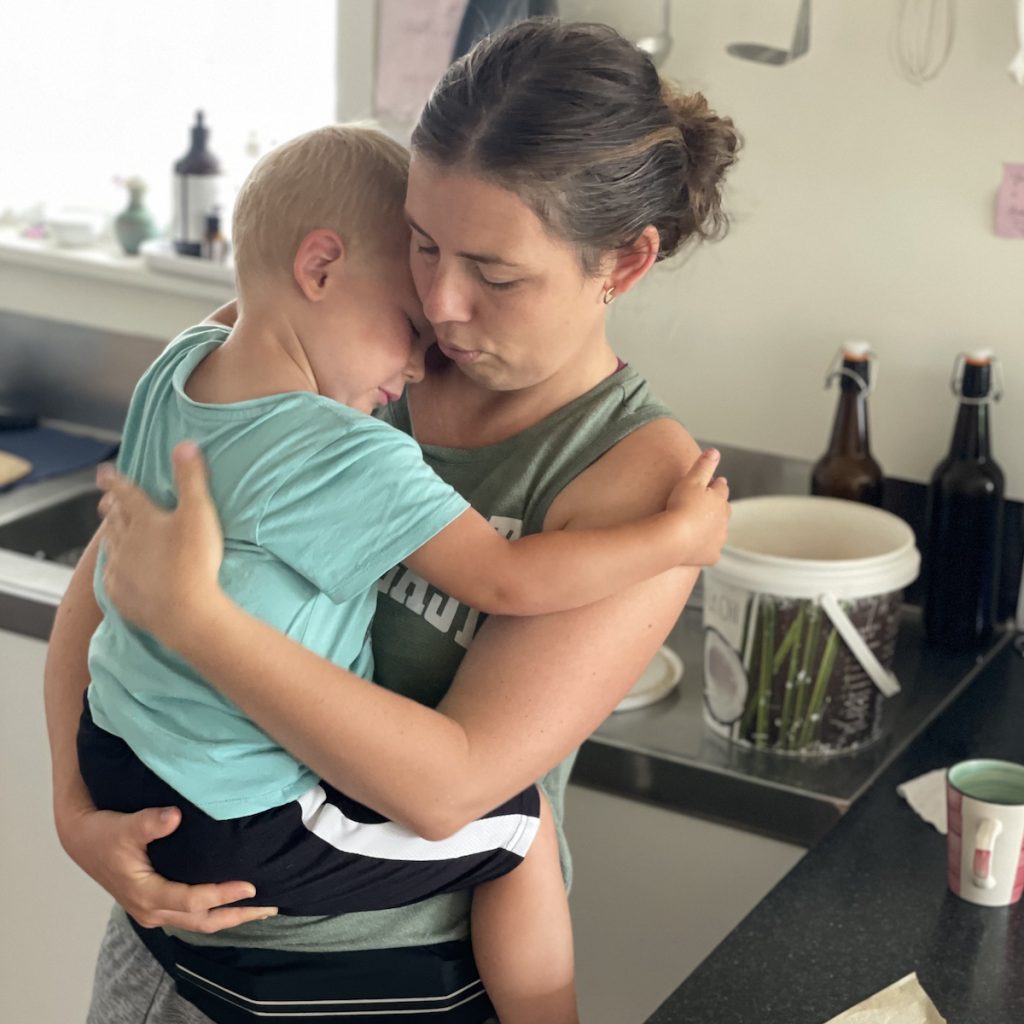
Step 1: Change Your Attitude to Get Out of Homeschool Overwhelm
Your attitude is comprise of three things: your feelings, the actions you take based on your feelings, and your beliefs.
Changing your attitude to avoid or get out of homeschool overwhelm may seem like too simple or too basic of a solution. But time and time again, research has backed up that our attitude is a big part of how we experience life.
Obviously, sometimes we can’t change how we FEEL about something. But we can practice making mindset shifts to help us not wallow and drown in negative feelings.
Specifically, I try to do the following three things when I start to feel homeschool overwhelm developing:
- Prioritize Progress Over Perfection: I like to remind myself that progress is my goal, not perfection. Nobody is perfect, no home is perfect, no mom is perfect, and no life is perfect.
But if I can continue to learn and show up diligently, I’m going to make progress along the way. And that is actually achieving my goals. - Embrace Flexibility: Homeschooling doesn’t have to look the same every single day. I try to remind myself that if things aren’t going according to how I had planned, I am getting an opportunity to grow my flexibility and resilience muscles!
And when I can acknowledge the moment of disappointment and then just let go of it, I find it reduces my stress immensely! - Give Yourself Grace: I try to actively practice encouraging myself when I’m starting to feel homeschool overwhelm.
Even simple things like, “Everyone got fed this morning, that’s a win!” or “You are doing a fantastic job ignoring the dishes so you focus on the kids,” can help.
Also, giving myself permission to sit for 5 minutes even when there is work to do (there is always work!) can be life giving!
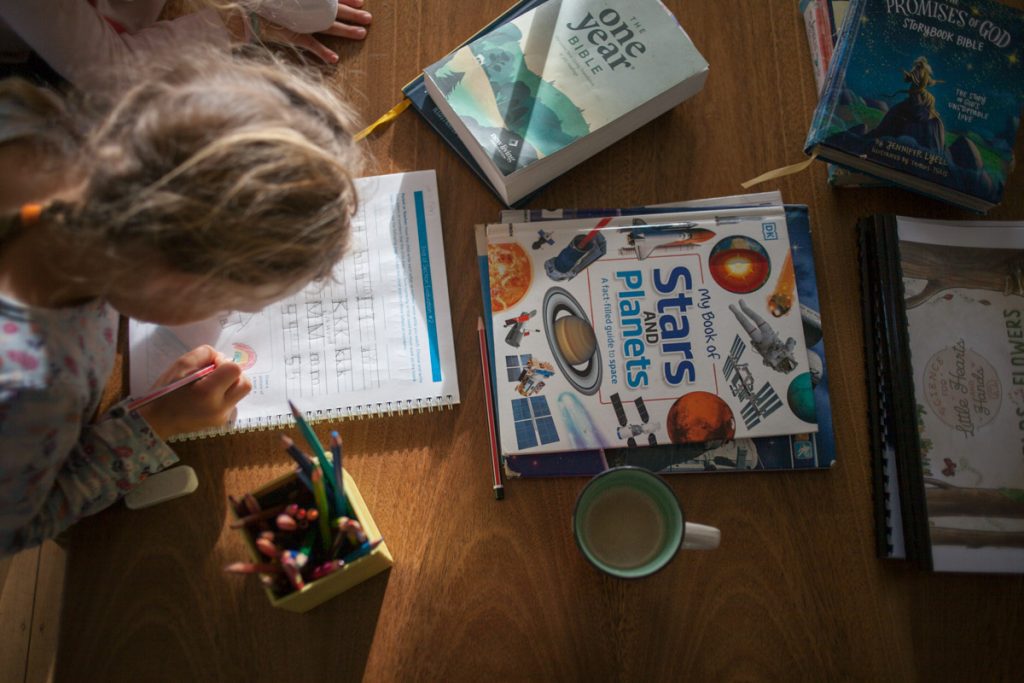
Step 2: Simple Schedule Adjustments to Proactively Avoid Homeschool Burnout
How we manage ourselves within the time we are given is going to impact how we feel about our day. So consider your schedule and routine if you are experiencing homeschool overwhelm.
Some specific schedule adjustments I’ve done to help me proactively avoid homeschool overwhelm and burnout are:
- Create a FLEXIBLE Routine: I’ve found structure to be SO important for my kids’ brain and my own, to help us know what comes next.
But I’ve also found it cannot be rigid. It needs to be about the sequence and the flow.
Try to develop a schedule that works for YOUR family, knowing things won’t go exactly according to plan (and that’s okay! Build in some flex room).
It may be helpful to create a visual routine for the kids to reference. Use pictographs for young children who can’t read. - Make Use of Quiet Time/Nap Time: These small windows of time are valuable!
When my baby takes his morning nap, that’s our cue to to go to our language arts and math curriculum with the older kids. And for the toddler to have some self-directed play.
I try to overlap our toddler’s nap after lunch and our baby’s afternoon nap time. That time is useful for my own household admin or more focused one-on-one lessons with the older kids. - Organize your day and week with simple time-blocking principles: Grouping tasks allows you to give the subject you’re working on concentrated attention, rather than jumping back and forth frequently.
We focus on language arts and math and Bible for the first 3 days of the week. Science, history, and art are my focus during the second half of the week, with the option to catch up or give a little more time toward a difficult language or math concept if needed.

Step 3: Training Kids for Independence to Deal with Overwhelm and Stress
As a homeschooling mom, I want to be involved in my kids’ lives. That’s one of the reasons we homeschool!
But it is also a fact that sometimes it feels like all the kids want or need my attention at exactly the same time! And that can feel overwhelming.
So I’m trying to find the balance between being involved, and also empowering my kids to develop their capabilities.
- Encourage Independent Learning: Set your kids up to do independent work before or after a time of hands on help and support. Workbooks, reading practice, or an educational video can help to provide them with opportunities to work independently.
Start with 3-5 minutes of independent learning time, and gradually start to expand that time to be longer.
And as your kids get older, you can also proactively teach them how to look up answers and solve problems BEFORE asking you.
I’m trying to build up to this with my little ones by responding to questions that I think they might already know the answer to with “What do you think? Do you have any ideas?” - Delegate Tasks: Older kids can help with set up for homeschool activities, organizing materials, or even help younger siblings with their tasks.
Household tasks can also be shared, if you’re willing to take the time to intentionally teach and train your kids to do chores (to realistic standards, of course!).
Each of our kids have a morning chore, a lunch time chore, and a dinner time chore to help support the flow of the household.
I’ll be honest, I usually do need to remind them. And I often need to check and make sure the chores have actually been done correctly. But they are getting more capable, which will continue to help into the future!
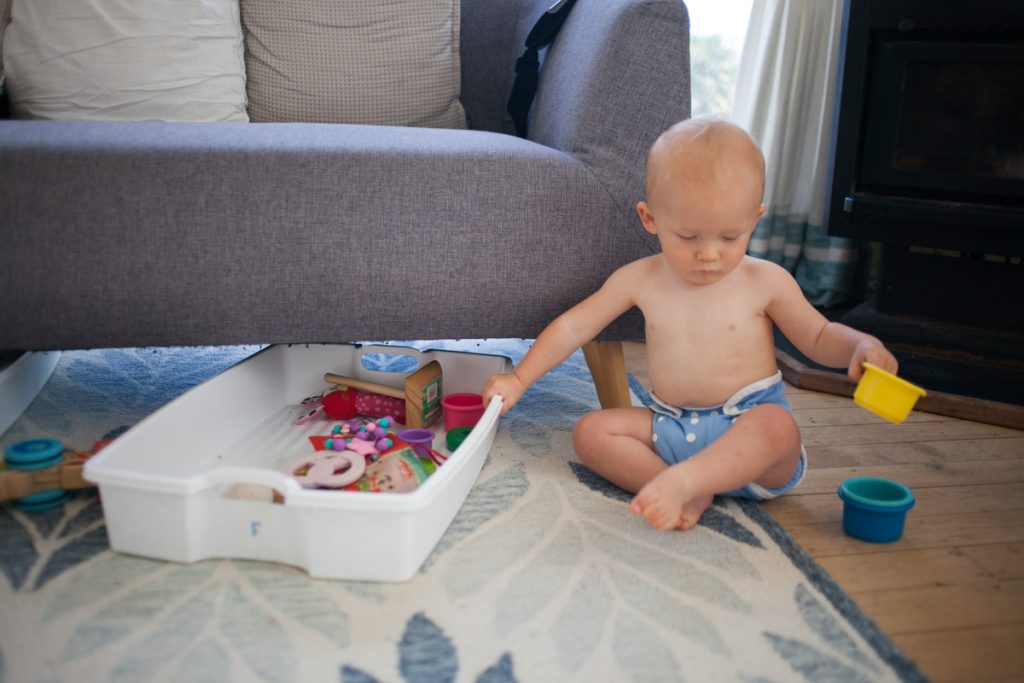
Step 4: Creatively Engaging Younger Kids
Having toddlers and babies while trying to homeschool can be a tricky situation. Especially both!
I’ve found I often need to separate my toddler and baby to keep the peace! I do this by using our baby gate and offering activity choices to my 2-year-old to give him something to keep busy.
To proactively avoid overwhelm and stress, try:
- Hands-on Activities: Sensory play like playdough, water play, matching colors or objects, and stickers will often keep my toddler occupied.
When we first started homeschooling, I set up a weekly loop system so he played with something different each day. I put away the activity when it wasn’t school time so it stayed novel.
Books are also a big hit with my 2-year-old. He loves Richard Scarry’s Cars and Trucks and Things That Go, Little Blue Truck, and Big Truck Little Island. Or sometimes, he can join us for our simpler read-aloud books.
And he loves having the Duplo, Magnatiles, and wooden train set to himself.
Our littlest, almost 1, will often happily unload whatever he can right now if he is not interrupted (a basket of washclothes, board books off the shelf, etc).
Since our home is small, the little boys usually play right around where the girls and I are doing school. I find if I can keep them separate from each other but both near me, they are usually happy for a stretch each morning. - Incorporate Movement: My toddler NEEDS physical activity, and the rest of us benefit from it too!
We often take a break and walk our driveway after read-aloud over breakfast. Then we come home and settle into math and language arts.
If it’s rainy, a round of “act like an animal,” Simon Says ,or a dance party are solid options to move our bodies.
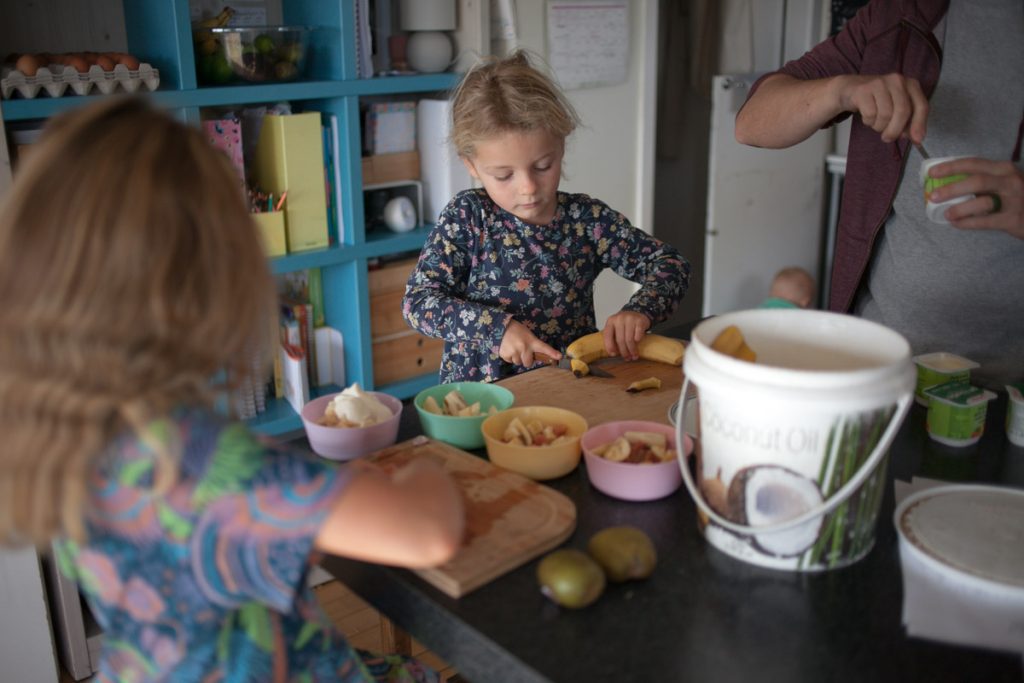
Step 5: Get (and Accept) Help When You Need It
I know sometimes getting help is easier said than done, but often a little creativity can go a long way.
Some specific things that I’ve utilized:
- Teaching and Empowering My Older Kids: It is worth it to teach your older kids simple household chores. The potential for learning how to pitch in and help with running the household is a huge benefit for everyone.
The kids confidence skyrockets because they are capable. They are invested in the running of the home. And they learn real-life skills.
You can also empower your older kids to help the young ones with simple tasks.
I follow a 5-step process whenever I teach them something specific to ensure the tasks happens how I desire:- show them
- allow them to help
- let them do it while you help
- have them do it while you watch
- let them do it and come back and check their work
- Outsource, Swap, or Accept Help: This has looked a little different in different seasons.
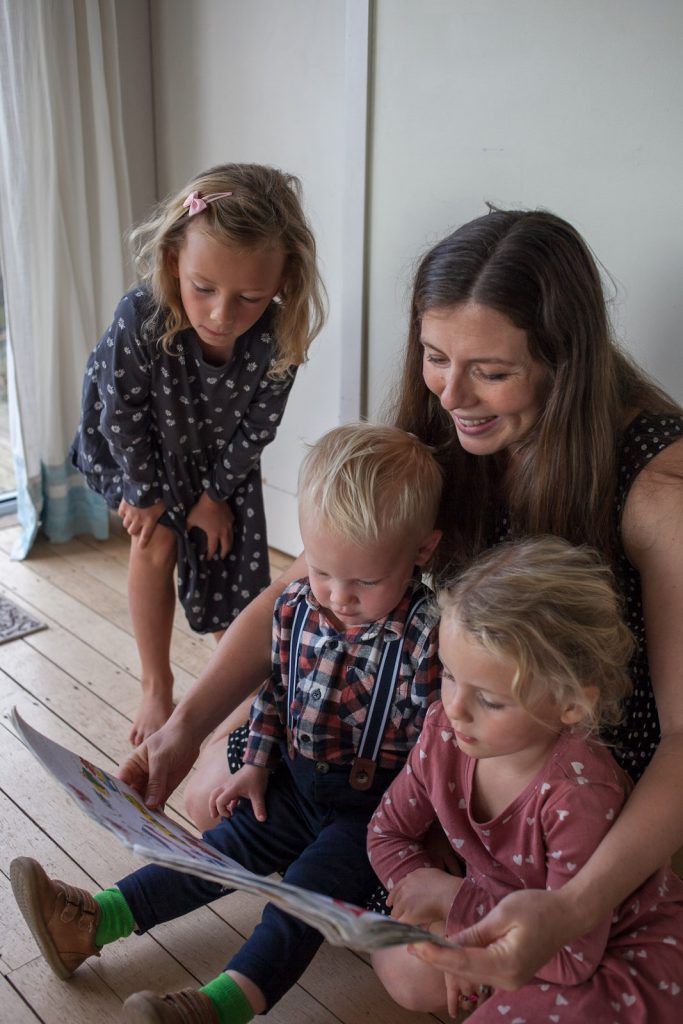
For a few months, I hired our neighbor’s 12-year-old daughter (who was trying to earn money before a trip) to come hang out with my kids for 2 hours once a week while I had time to clean or cook or do things that are hard when I’m the go-to adult.
I also had a friend offer to come once a week for an hour or so with her very social 9-month-old at the start of last year. My friend would take her little guy and my 4 and 1 year olds (at the time) for a long walk around our yard or play in the house while I sat down with my oldest to focus on her reading.
Additional Resources:
You may find my post on our first year of homeschooling’s daily and weekly routine helpful for specific ideas on how you might simplify or organize your day or week.
I also have a video that outlines the various philosophies of education that you might find helpful to identify if there is a mismatch between what you’re doing with homeschooling and what your personal educational philosophy is.
And again, my Conquer the Chaos Mini-Course was developed out of working hard to figure out how to streamline and bring calm and intentionality to my day as a homeschooling mom with multiple littles in the home!
Conquer the Chaos Mini-Course: Time Management, Home Organization, and Mindset Strategies for Homeschooling Moms
Conquer the Chaos is a practical, inspiring, and grace-filled mini-course designed to help homeschooling moms bring calm, clarity, and confidence back into their days. Learn simple time management strategies, home organization systems, and mindset shifts that actually work with babies and toddlers underfoot.
Now, I realize you might think, “that is the LAST thing I need to look at! I’m overwhelmed” but hear me out: you may be overwhelmed because you’re doing a bunch of stuff with homeschooling that you don’t actually believe in. If you can get clarity on that, and identify what you DO believe is worth doing, that may help you get out of an overwhelmed, burnt out state.
I also found Episode #231 of Read Aloud Revival podcast SUPER encouraging (and hilarious) coming from a mom who has “been there, done that” in the homeschooling era with babies and toddlers.
Final Encouragement for Moms Experiencing Homeschool Overwhelm with Babies and Toddlers:
- Homeschooling with babies and toddlers is tough. It’s also rewarding, of course, but it can be very intense! It is OK if you get much less done than you would like!
- It’s OK to ask for help, take breaks, and utilize trial and error to see what is realistically sustainable for you.
- You are doing a great job, even on tough days! Keep going, and remember, you’re not alone in this journey.
What are some strategies you’ve found helpful when homeschooling with young kids? Share your thoughts in the comments below, I’d love to hear your ideas, and readers may as well!
And if this post has been helpful for you, would you consider sharing it on Pinterest or on your social media platform? Also, if you’d like tips, resources, and encouragement on this parenting and homeschooling life journey on a monthly basis, sign up for my newsletter and you’ll get that delivered to your inbox at the end of the month!