
Homeschool Planning: How to Map Out Homeschool Lesson Plans for the Year

Homeschool Planning can feel overwhelming. With hundreds of curriculum options, a multitude of education philosophies, and dozens of homeschool planners available, it’s easy to wonder where to even begin!
Having had the good fortune of growing up in a homeschooling family, and then teaching for half a dozen years at a community college, I learned before I even started homeschooling my own kids that the best homeschool planning strategy isn’t necessarily the most detailed one, it’s the most realistic one!
I started developing this homeschool planning system early on in our homeschool days – pulling from my experience planning curricula for my community college students as well as recalling what my Mom did – and it has served me faithfully.
Although I do make tweaks and adjustments each year, this basic system gives me confidence as I approach the year, and it takes a lot of the guess work out of planning the school year. This is especially helpful as my homeschool classroom has grown from one child to multiple children of various ages.
In this post, I’ll walk you through exactly how I plan our homeschool year: from choosing curriculum and organizing family subjects to mapping out lesson plans that are both flexible and achievable. Whether you’re homeschooling for the first time or simply looking for a better planning system, I hope this process gives you a practical starting point for your own homeschool planning.
This post may contain affiliate links, which means I make a small commission at no extra cost to you. See my full disclosure here.
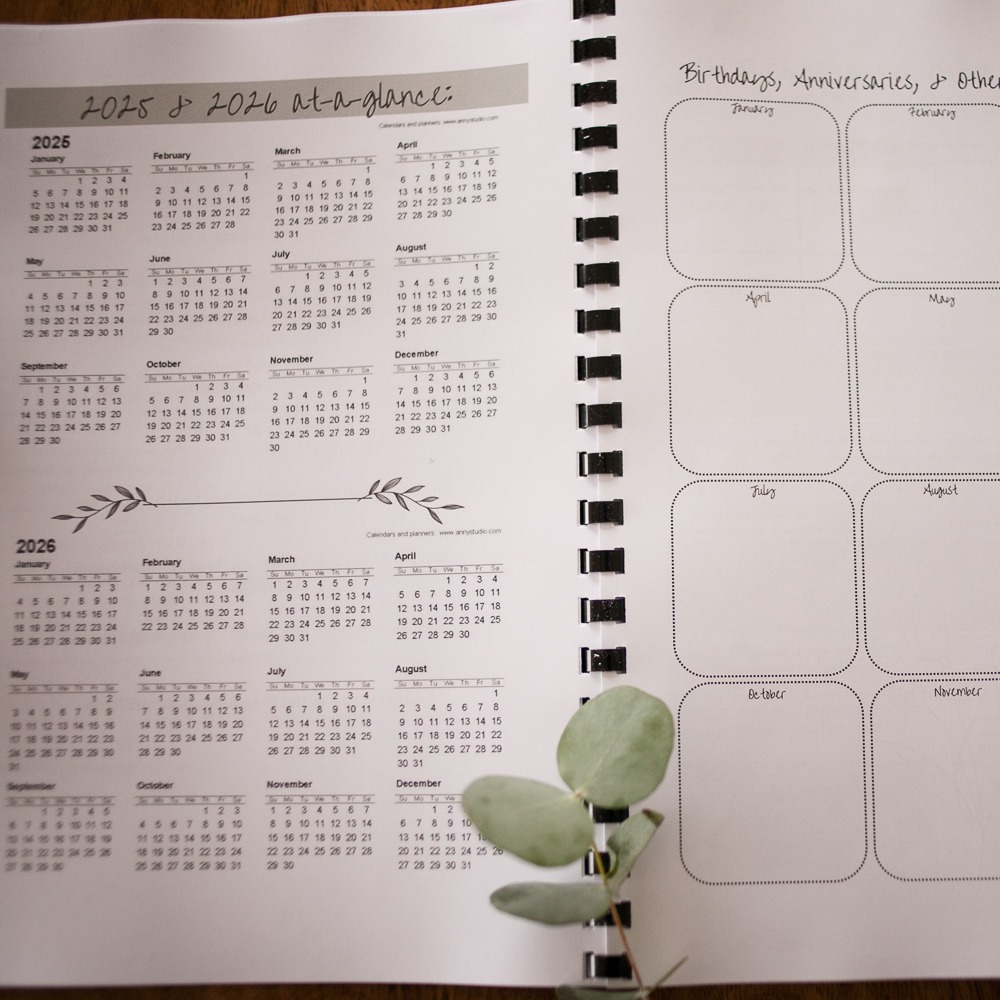
Step 1: Homeschool Planning Starts with a Realistic School Year
Before I buy a single curriculum, I decide how much school we can realistically accomplish. And I make that determination by looking at the calendar and mapping out which weeks will be “school weeks” and which weeks will be “flex weeks” during the school year.
Since we started homeschooling in New Zealand, which operates on a 40 weeks per year school system, that is what I originally planned. However, I found that we naturally completed our school materials in about 36-38 weeks.
Now that we have moved to the USA, I’m planning for a 38-week-school-year. Since there are 52 weeks in a year, a 38-week-school-year is a very realistic plan to prevent burnout and allow for plenty of “life” to happen. We’ll take two weeks off at Christmas, and have two additional “flex” weeks without having to adjust our “end” date as summer approaches.
We’re starting the year in early August (although I anticipate the first four weeks will be just 3 days per week of school rather than our usual 4 days per week). As a result, we’ll finish the school year toward the end of May.
My main tip for starting your homeschool planning process is: Plan your curriculum to fit your year, not your year to fit your curriculum.
Step 2: Plan by Subject Instead of By Child
I don’t plan one child individually for all subjects and then move on to the next child. Instead, I tackle each subject one at a time across the whole family.
Some subjects will have a specific curriculum for each child (such as math and language arts and handwriting), but most subjects will be learned together as a family.
Besides math, language arts, and handwriting, this year we will also study:
- History
- Science
- Bible & Theology
- Spanish
- Music
- Art Appreciation
- Handicrafts
- Physical Education

Step 3: Choose Your Core Curriculum
Since my children are still young, I focus first on the core subjects: math and language arts (and, by extension, handwriting). These are the only subjects I teach individually, so I want to choose curricula that fit each child’s developmental stage, learning style, and our family’s budget.
Over the years, I’ve found that I prefer curricula that are both open-and-go and visually engaging. The attractive layouts and hands-on activities keep my children motivated, while the minimal prep work helps me consistently prioritize these foundational subjects.
When I first started homeschooling, I used Teach Your Child to Read in 100 Easy Lessons for phonics. Although it has helped many families, it wasn’t the best fit for us. Around the same time, we began using The Good and the Beautiful Kindergarten Math, and my daughter loved it. Based on that experience, I switched to The Good and the Beautiful Language Arts the following year and later used their preschool curriculum with my second child.
So far, that combination has served our family well. My children enjoy the games, independent practice, and hands-on activities, while I appreciate being able to finish breakfast and begin school without extensive preparation. Since it’s working for our family, I’m happy to continue using it.
With 120 lessons in each math and language arts workbook, we plan to complete about 3 lessons per week, erring toward 4 a handful of times over the school year.
To guide your curriculum selection, I would suggest considering:
- Is it enjoyable?
- Is it easy to teach?
- Can my child(ren) work independently when appropriate?
- Is it affordable?
- Will we realistically finish it?

Step 4: Plan Your Family Subjects
Once I have chosen the curriculum for math and language arts for my kids, I move on to the next “tier” of subjects in importance to me: history and science.
I use a combination of official curricula and “living” read-alouds to accompany the learning. I’ll tackle the curricula first!
Homeschool Planning for History:
For history, I prefer to teach all of my children together using one family-style curriculum. Not only does this simplify my planning, but it also allows us to share discussions, read-alouds, and activities as a family while still meeting each child at their own level. This is how my mom taught history when I was growing up, and it’s an approach I’ve always hoped to use in our homeschool as well.
Since we’ve had such a positive experience with The Good and the Beautiful in other subjects, I chose to start their four-year history cycle this year. My school-age children will complete the age-appropriate companion books while studying the same historical time period together.
We’ll need to complete the curriculum at a pace of approximately 1.5 lessons per week to complete it during our 38-week school year. That amount felt reasonable to me!
When planning a family subject like history, I look for a curriculum that can be adapted across multiple ages. It reduces my preparation and tracking time, keeps our family learning together, and makes homeschooling multiple children much more manageable.
Homeschool Planning for Science
Rather than choosing science units one year at a time, I wanted to create a long-term science plan for our homeschool. Since The Good and The Beautiful offers many stand-alone science units, I listed out every unit along with the number of lessons in each one.
Then, instead of asking, “How many units can we fit into a year?” I asked, “How many science lessons can we realistically complete?”
Because I plan for a 38-week homeschool year, I aimed for one science lesson per week. That pace works well alongside the rest of our homeschool schedule and leaves room for flexibility throughout the year.
Unlike our history curriculum—which follows a single year-long sequence with a set number of lessons—the science units are modular. That gives me the freedom to combine units into a realistic yearly plan without feeling like I need to complete every available course at once.
Whenever possible, I grouped units with similar themes—for example, Arthropods, Mammals, and Birds make up this year’s science plan. Other years pair naturally related subjects like Paleontology and Geology. When thematic groupings aren’t possible, I let the total lesson count guide my decisions so that each year’s science plan remains manageable.
One of the biggest lessons I’ve learned about homeschool planning is that it’s okay to leave room for future years. You don’t have to fit every interesting science topic into a single school year. A realistic plan that your family can enjoy and complete is far more valuable than an ambitious one that leaves me feeling behind and stressed.
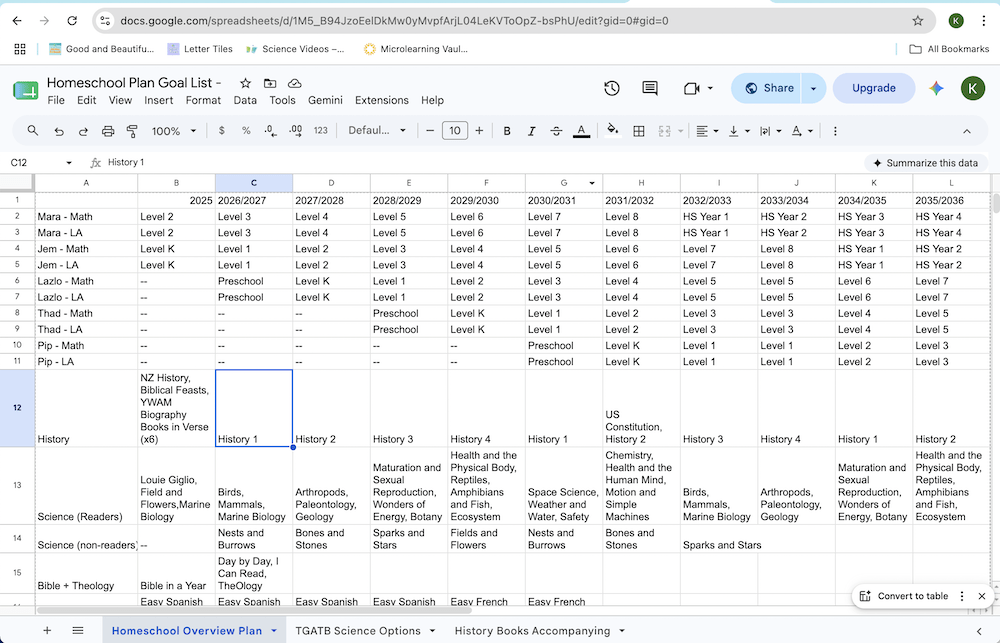
Step 5: Organize Your Homeschool Planning with a Master Spreadsheet
As our family has grown, I’ve found it helpful to keep all of our homeschool planning in one place. Instead of starting from scratch when I prepare to purchase materials for the school year, I maintain a single Google Spreadsheet that serves as the “Homeschool Master Plan” for our homeschool.
The first worksheet gives me a long-term overview of our homeschool journey from my oldest child’s first-grade year through her eighth grade. Each column represents a school year, while the rows include both my children’s individual subjects (such as math and language arts) and our family subjects (history, science, Bible, Spanish, music, art appreciation, and handicrafts).
Because I plan several years in advance, I can quickly see which curriculum level each child will need, what family subjects we’ll study together, and what materials I’ll need to purchase each year. It makes curriculum ordering much simpler and saves me from making the same decisions over and over again.
Of course, this is a living document. I update it as our plans change, but having a long-term roadmap gives me a clear starting point every school year.
(Would you like some HELP with your homeschool planning?)
Grab a copy of my Homeschool Planning spreadsheet (for free!) and a step-by-step guide to how to use the spreadsheet by dropping your email address below!
Step 6: Bring Your Homeschool Planning to Life with Living Books
Once the “meat and bones” of our curriculum plan are in place, I start thinking about how to make our learning memorable and experiential.
One of my favorite ways to do this is by pairing our history and science studies with family read-alouds. These shared stories deepen our understanding of the topics we’re studying while creating memories together. We listen during family reading time, in the car (we love audiobooks!), and even while folding laundry.
To keep track of ideas, I use two additional worksheets in my Homeschool Master Plan Spreadsheet—one for history and one for science. As I discover book recommendations from family, friends, homeschool curriculum reading lists, library catalogs, or my own research, I add them to the appropriate topic. I also color-code each title so I know whether I already own it, can borrow it from the library or a friend, or need to purchase it.
This year, while studying Ancient Egypt, we’re listening to The Golden Goblet by Eloise Jarvis McGraw as an audiobook. Alongside our Arthropods science unit, we’re reading The City Under the Back Steps by Evelyn Sibley Lampman. Both stories help transform our lessons from facts on a page into adventures we experience together as a family.
We certainly won’t read every book on my lists, but that’s not the goal. Instead, I’ve created a growing collection of living books that I can draw from year after year, making homeschool planning easier while enriching our family’s learning with stories we’ll remember long after we’ve finished the curriculum.

Step 7: Add the Enrichment Subjects
In order to provide my kids with an education comparable in breadth to what they would receive if they attended a private school or public school, I believe I need to teach math, language arts, history, and science every year.
Then, I also get to add in the “enrichment” subjects that make our homeschool learning extra rich:
Bible & Theology
When planning our homeschool enrichment subjects, I think about more than just completing a curriculum. I want to cultivate habits and foundations that will serve my children for years to come.
This year, I want to intentionally focus on building a rhythm of Bible reading while also helping my children develop a deeper understanding of theology. My goal is not only for them to know how to read the Bible, but also to understand how to interpret Scripture within the larger story of God’s Word.
To encourage this, we will begin our mornings with a simple “household Bible time.” Everyone will spend a few minutes reading or looking through Scripture at their own level, and then we will briefly share something we noticed or learned.
Alongside our Bible reading, in my homeschool planning I intend to slowly work through a children’s theology book. I am not setting a strict timeline for completing it, as I simply want to create intentional space for conversations about important theological ideas as our children grow.
So this year, my 8-year-old will read a Day by Day Kids Bible, and my 6-year-old will work on I Can Read My Illustrated Bible: For Beginning Readers. My younger children will be invited to join us with a selection of storybook bibles to look through during our 10-minutes of bible time, including : The Promises of God Storybook Bible, God’s Big Picture Bible Storybook, The Jesus Storybook Bible, and The New Bible in Pictures for Little Eyes.
Foreign Language
My husband speaks Spanish fairly fluently and currently uses it a lot in his workplace. I studied it a little in middle school, but I would love to feel more confident communicating in Spanish. Also, since we live in an area of the USA where there are many Spanish-speakers in our community, I believe Spanish would be a tool our whole family could utilize at times to connect with people around us.
This year, for our foreign language study, my homeschool planning includes completing Easy Spanish: Junior Level throughout the year. There are 34 lessons in the curriculum mean we will do about 1 lesson per week. This curriculum is designed for kids ages kindergarten through 3rd grade, which is perfect for our family.
Since this will be a family topic, we’ll listen to the audio recordings together. Next year, we may advance up to the more complex and robust Easy Spanish: Level 1, but we’ll see how this year goes!

Handicrafts
I believe handicrafts are an important part of a child’s education for several reasons. They give children the opportunity to create something beautiful and meaningful, while also learning patience, perseverance, and problem-solving through hands-on work.
There is also something valuable about developing a skill that can serve them throughout their lives. Once a child gains some level of mastery, handicrafts can become a peaceful way to keep their hands busy while listening, reflecting, or simply enjoying the process of creating. I still use hand sewing skills that I learned as a young child, and I love that these practical skills can continue to serve us well into adulthood.
My children have already learned some basic crocheting and embroidery, but this year I would like to give them a more intentional and systematic introduction to several handicraft skills. We will be using Simply Charlotte Mason’s Handicrafts Made Simple series to explore knitting, crocheting, and hand sewing.
The series recommends spending approximately 12 weeks on each handicraft, so if my homeschool planning includes completing all three topics, they will naturally fit into our school year at about one lesson per week.
Art Appreciation
My children love creating art, and I also want them to develop an appreciation for the beautiful artwork created by others. As I plan our homeschool year, I intentionally include opportunities to explore art history and famous works of art in small, manageable pieces.
We began A Child’s Introduction to Art at the end of last school year, so we’ll continue working through it this year. After that, I plan to use Come Look With Me: Exploring Landscape Art with Children and Come Look With Me: World of Play. Both books encourage thoughtful observation and discussion, making them a simple way to introduce children to famous works of art.
Rather than trying to fit in long art lessons, I count each two-page spread as one lesson. Between the remaining pages in A Child’s Introduction to Art and the two Come Look With Me books, I have about 43 lessons. By planning for roughly one lesson each week (with an occasional extra lesson), we’ll be able to work through them comfortably over our 38-week school year.
One of the things I’ve learned about homeschool planning is that enriching subjects don’t need to take hours each week. Consistent, bite-sized lessons often add up to a rich education over the course of a school year.
Music Appreciation
Although I’m not especially musical myself, I want my children to develop an appreciation for beautiful music and the skill, creativity, and discipline behind it.
Over the past couple of years, we’ve read through much of Then Sings My Soul, learning the stories behind many of the classic hymns in our church tradition. This year, I decided to broaden our music studies by using The Good and the Beautiful’s Music Appreciation 1 course. The video-based lessons introduce children to composers, musical concepts, and a variety of musical styles, making it an engaging enrichment subject that requires very little preparation on my part.
I also appreciate that the video format allows my children to continue learning while I prepare lunch or put the baby down for a nap. Since our home has an open floor plan, I can still listen in on the lesson without needing to lead it directly.
Alongside the course, we’ll continue working through The Story of the Orchestra, which introduces children to the different instruments of the orchestra. There will likely be some overlap between the two resources, but I don’t mind—repetition often deepens learning.
Between the two resources, I have about 52 short lessons planned. We’ll generally complete one video lesson and one spread from The Story of the Orchestra each week, while also adding music by the composers we study to a Spotify playlist that we can enjoy during chores and throughout our day.

Physical Education
Physical education is one area where I don’t rely on a formal curriculum. Instead, my husband and I try to cultivate an active lifestyle as part of our family culture. I believe that healthy habits are often more caught than taught, so we want our children to see us enjoying movement as a normal part of everyday life.
That means prioritizing family walks and hikes, staying active outdoors, and inviting the kids to join us in exercise. Recently, I’ve started running again, which the kids love to do with me. They also enjoy joining me for workout videos or choosing kid-friendly exercise videos of their own. Outside, I can usually find them climbing trees, playing tag, swinging, or simply running around the yard.
Alongside these everyday habits, I also like to intentionally introduce new physical skills throughout the year. We typically schedule a couple of weeks of intensive swimming lessons each year, and last year the girls enjoyed weekly Irish dancing classes. I’m still exploring what dance opportunities might look like this year.
One new addition to our homeschool plan is a monthly “Learn a Sport” experience Each month we’ll choose a different sport—such as soccer, basketball, volleyball, or tennis—watch a short video explaining the rules, then head outside and try playing it together as a family. My brother-in-law is a PE teacher, so I’m hoping his family will join us for some of these practice days, making them even more enjoyable.
For me, the goal of physical education isn’t simply checking off another subject. It’s helping my children develop healthy habits, confidence in trying new activities, and a lifelong enjoyment of being active.
Step 8: Keep a Separate Record of What You Actually D0
The final step in my homeschool planning process is to record what we actually do. After all, a plan is only the starting point.
I keep track of our homeschool in two ways.
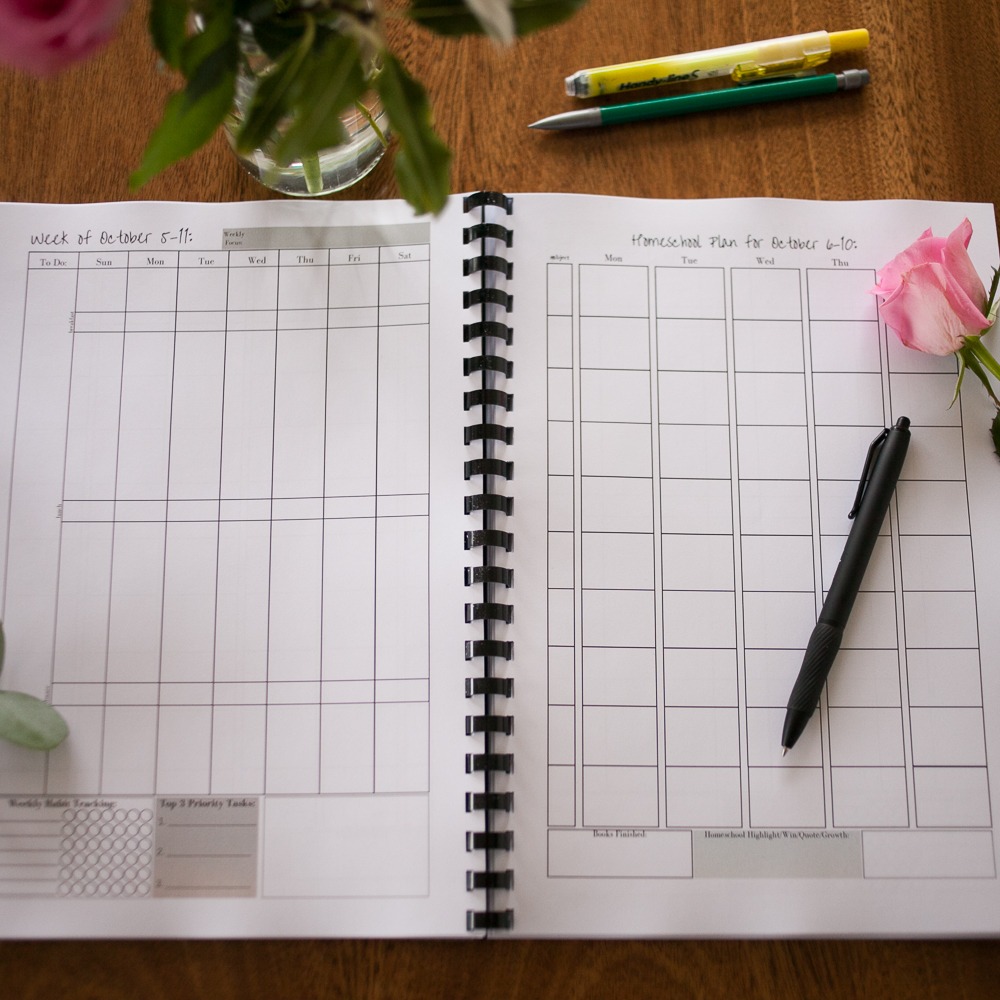
First, I use my homeschool planner to record our day-to-day learning. At the beginning of each week, I pencil in our lesson plans, checking them off as we complete them. Because I only plan one week at a time, it’s easy to move unfinished work to the following week or adjust our plans when we work ahead.
I also write down completed family readalouds on the day we finish them so I can easily access a list of the books we’ve enjoyed together throughout the year.
(You can purchase my planner using the link below if you are looking for a detailed, homeschool and life admin planner)
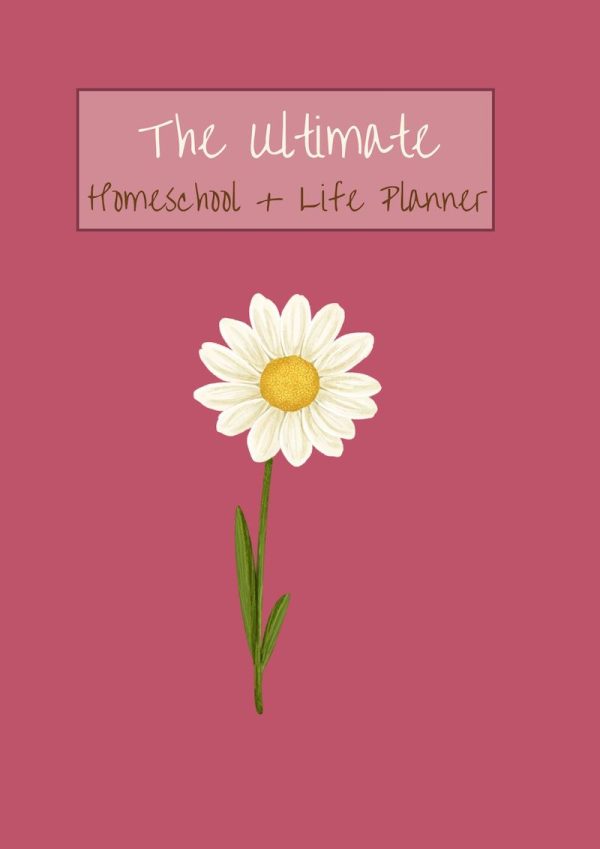
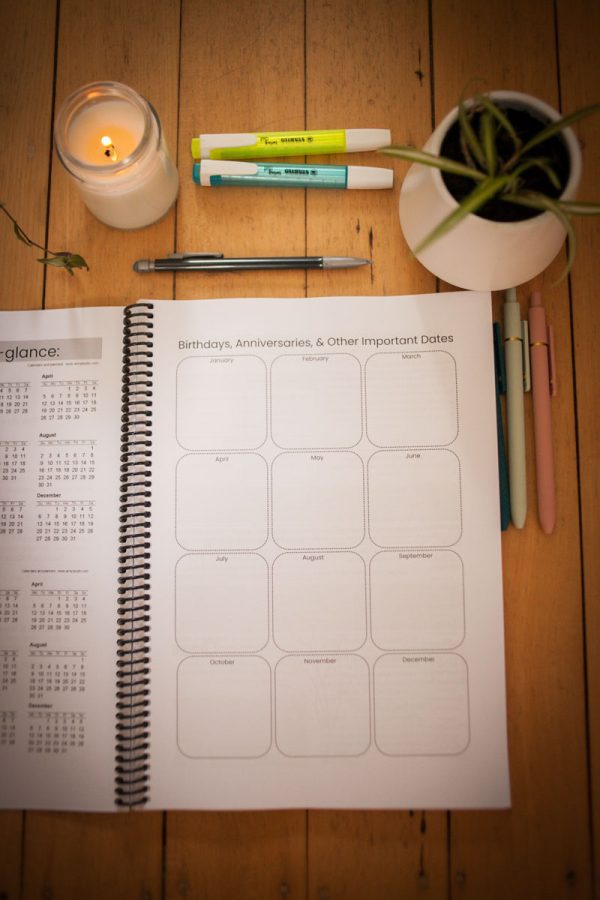
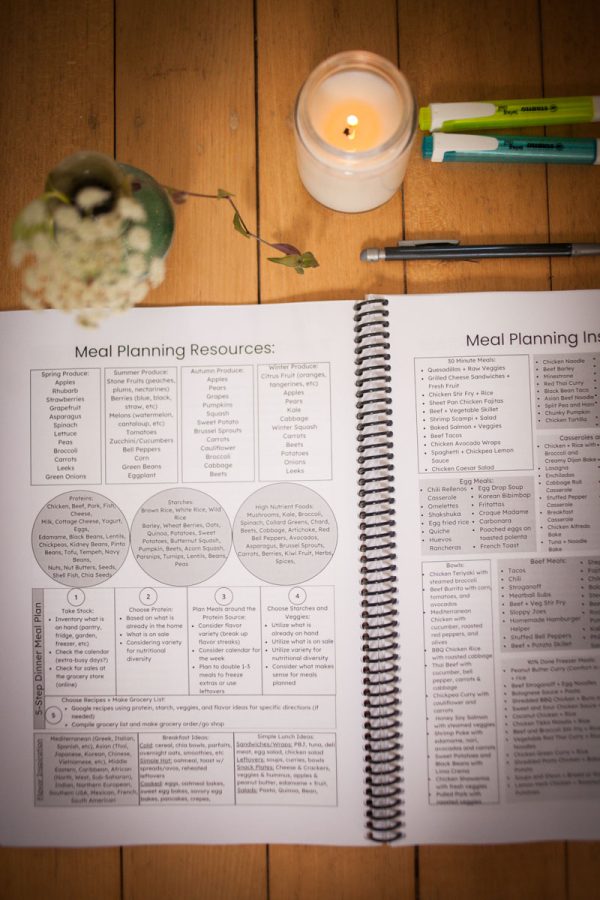
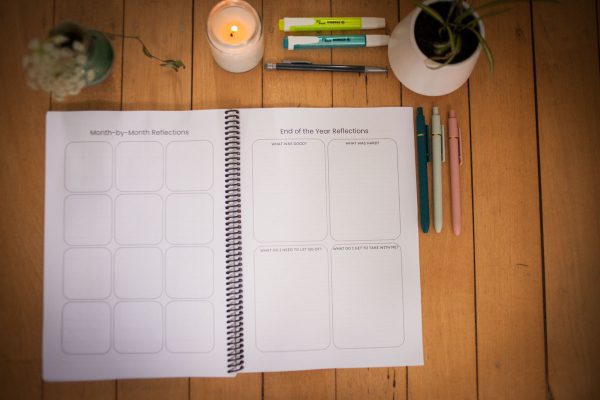
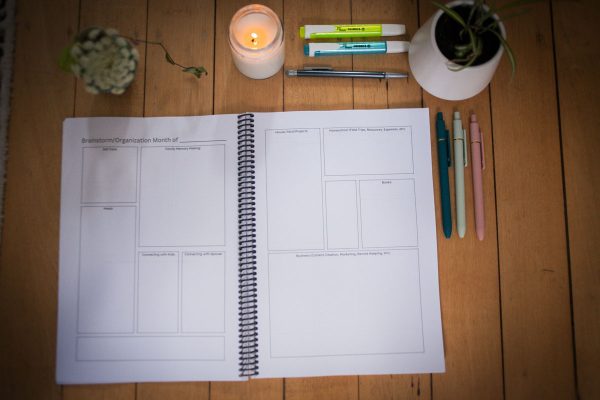
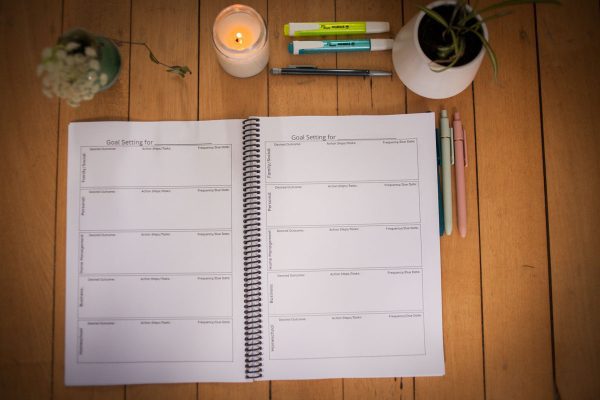
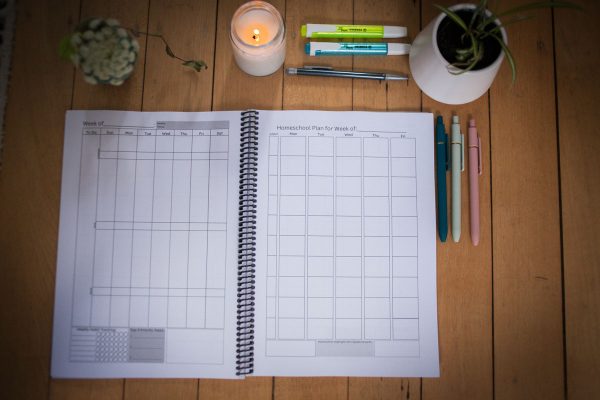
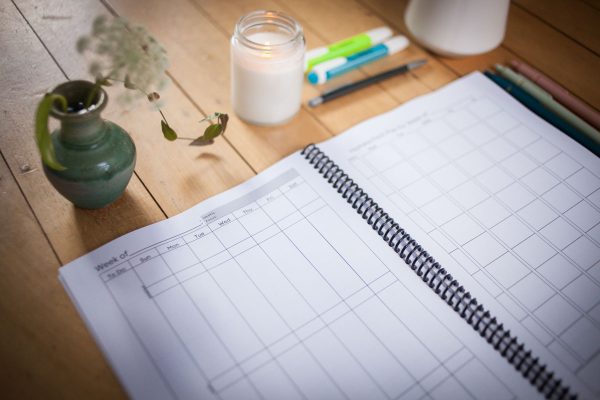
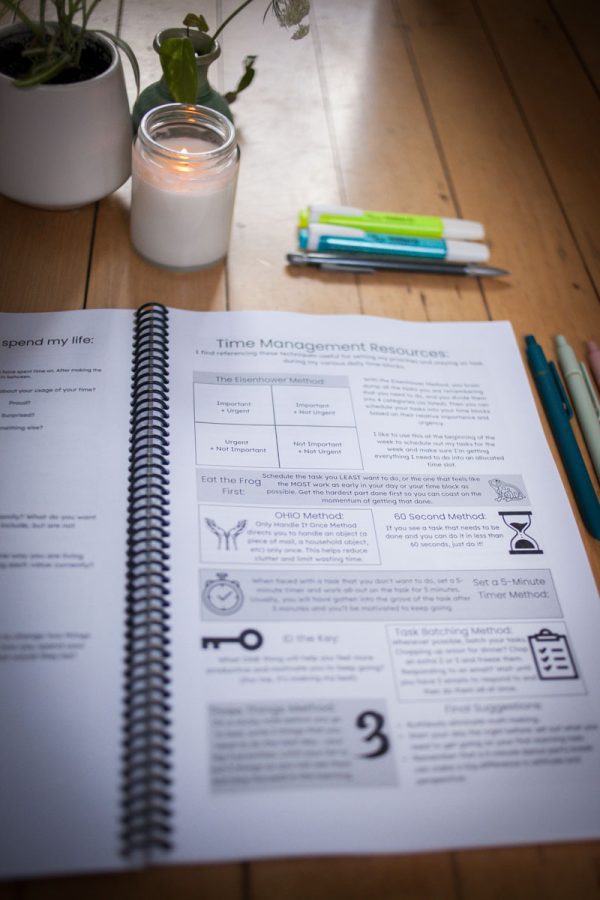
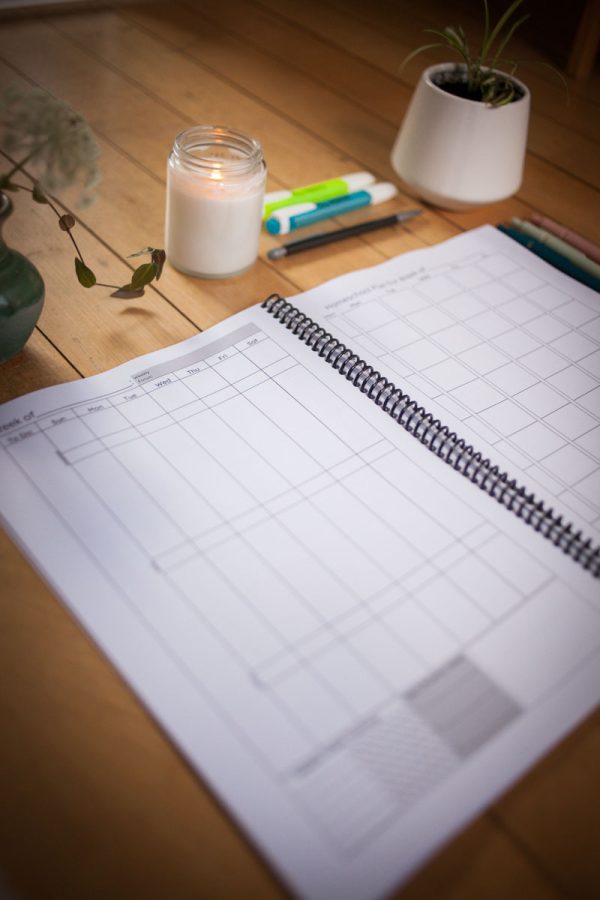
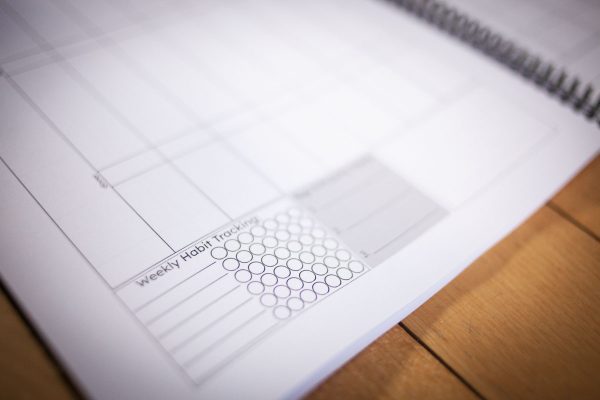
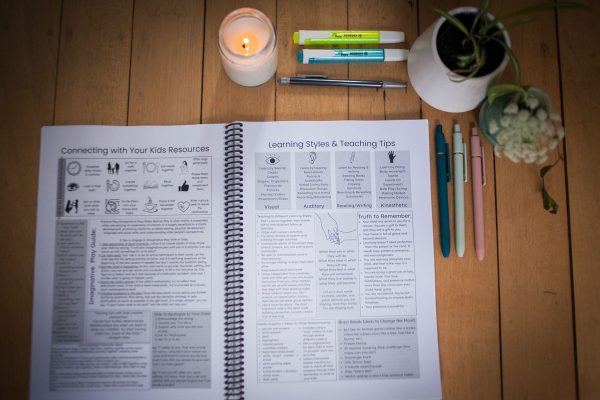
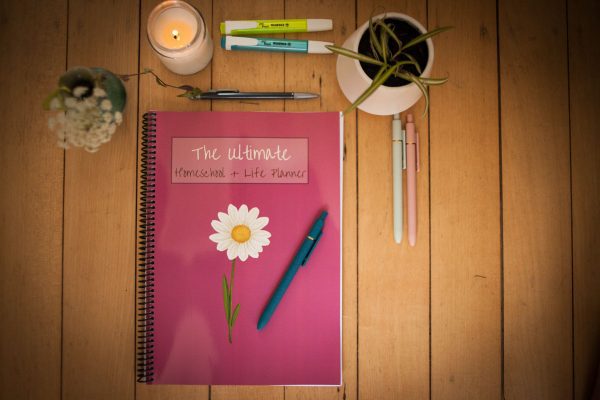
Homeschool + Life Admin Planner (PRINTED + UNDATED)
Your all-in-one, undated homeschool + life admin planner. Yearly, monthly, and weekly layouts. Space for 10 subjects, meal planning, habit tracking, and weekly priorities—perfect for record-keeping or planning with confidence.
Second, I keep a separate Student Record Spreadsheet. Each child has their own worksheet where I record the subjects they studied each year, the curriculum we used, and a brief summary of the main concepts they learned. I also keep a list of the books we read together and those they completed independently.
These records serve a practical purpose—I can quickly remember which curriculum worked well, what each child has already covered, and how to plan for younger siblings as they reach those same stages.
But perhaps more importantly, they remind me that homeschooling is about more than following a plan.
Some of our richest learning has come from unexpected rabbit trails, spontaneous conversations, library books we discovered by chance, or experiences that were never written into my lesson plans. By recording what we actually did instead of only what I intended to do, I preserve those memories alongside the curriculum and create a more complete picture of our homeschool journey.
After all, the goal of homeschool planning isn’t to follow a perfect plan—it’s to create a meaningful education for the children God has entrusted to us.

Final Thoughts on Homeschool Planning
Homeschool planning doesn’t have to mean creating a perfect schedule or having every lesson mapped out before the first day of school. For me, it’s about building a simple system that helps me make intentional decisions while leaving plenty of room for life to happen.
Over the years, I’ve found that each school year becomes easier to plan because I’m no longer starting from scratch. Instead, I’m building on what I’ve learned, refining what works for our family, and creating a homeschool that reflects our values and the unique personalities of our children.
If you’re feeling overwhelmed by homeschool planning, my encouragement is to simply start with the next decision in front of you. Choose a realistic school year. Select your core curriculum. Add the family subjects. Enrich your learning with great books. Record what you actually do. Then trust that your homeschool will grow and develop one year at a time.
You don’t need a perfect homeschool plan.
You just need a plan that’s realistic, intentional, and flexible enough to grow with your family.
Free Homeschool Planning Starter Kit
If you’d like to create a homeschool planning system similar to the one I use, I’ve put together a free Homeschool Planning Starter Kit that includes the basic spreadsheet planning templates I use to map out our curriculum, organize living books, and keep student records.
It’s my hope that these simple tools help you spend less time wondering where to begin and more time enjoying the homeschool journey alongside your children.
Grab your PDF guide and link to copy the spreadsheet – for FREE – by filling in the form below: